About Rolfes SDG Academy

We're Building a Global Movement of Youth Climate Leaders

Democratizing sustainability education. Empowering action. Reconnecting humanity with nature.

Our Story

Free. Accessible. Action-oriented. Global.

Rolfes SDG Academy (RSA) was born from a simple but powerful realization: the youth most affected by climate change often have the least access to quality education about it.

Today, RSA is based in Vlotho, Germany and operates globally through digital platforms. We bring together youth, academics, UN professionals, and grassroots activists to learn, debate, design, and implement solutions for climate action and sustainable development.

We teach about the SDGs & empower youth to lead on them.

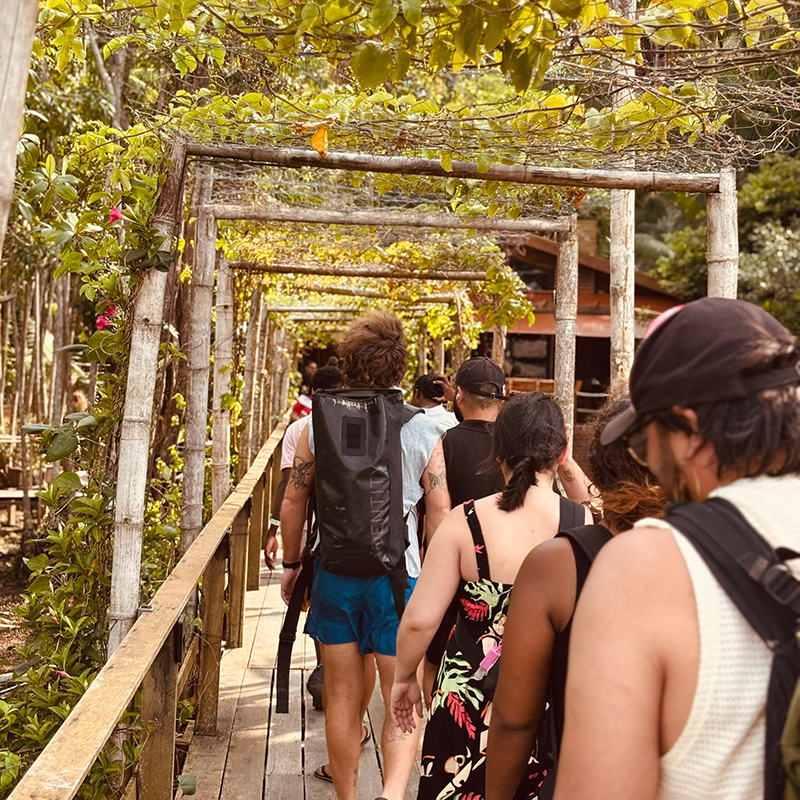
Rolfes SDG Academy participants learning and collaborating together

Vision & Mission

What We Aim to Build

RSA exists to make sustainability education globally accessible and directly connected to real-world action.

Our Vision

A world where every person is equipped with the knowledge needed to act in favor of life itself.

We envision a future where:

  • Youth from every continent collaborate seamlessly on climate solutions.
  • Education systems center sustainability, equity, and systems thinking.
  • Communities are empowered to design and implement their own solutions.
  • Global networks transcend borders, hierarchies, and economic barriers.
  • A generation of leaders emerges, grounded in science, ethics, Ubuntu, and action.

Our Mission

Free, globally accessible education for climate action and sustainable development.

To provide free, globally accessible education on climate action, biodiversity conservation, and sustainable development, empowering youth to become leaders, innovators, and policymakers who transform their communities and influence global systems.

We do this through:

  • Intensive learning programs, including the Solar Cohort.
  • Policy dialogue spaces, including Global Youth Parliament Debates.
  • Knowledge sharing through the Expert Lecture Series.
  • Innovation platforms such as the SDG Ideas Hub.
  • Research and publications, including policy briefs, reports, and articles.

What Drives Us

Principles, Values, and Philosophy

Our work is shaped by a clear educational philosophy: climate learning must be accessible, practical, and grounded in shared humanity.

Accessibility over Exclusivity

While prestigious institutions charge €5,000-20,000 for sustainability programs, we offer world-class education free of charge. We recognize that those most affected by climate change often have the least resources.

Climate justice is social justice.

  • All programs are free.
  • No geographic barriers through fully online access.
  • Scholarships and stipends are available.
  • Materials are developed in multiple languages.
  • Accessible formats support people with disabilities.

Action over Theory

Each participant doesn't just learn about solutions. They design, implement, and monitor real projects in their communities, creating a living laboratory of grassroots innovation.

Theory without practice is hollow. Practice without theory is blind.

  • Every cohort includes a community project.
  • Participants implement solutions in their regions.
  • We measure real-world impact, from people reached to policies influenced.
  • Alumni receive seed grants to continue their work.
  • Knowledge is meant to be used, not just accumulated.

Ubuntu Philosophy: "I Am Because We Are"

Drawing from the African principle of Ubuntu, RSA fosters collective intelligence where knowledge flows multidirectionally, not from North to South, but through mutual learning.

A young farmer in Uganda teaches an engineering student in Berlin. A policy student in Mumbai shares with a climate activist in Sao Paulo.

  • Peer learning and mentorship.
  • Intergenerational knowledge exchange.
  • Integration of indigenous and scientific knowledge.
  • Diverse perspectives strengthen solutions.
  • We rise together, or not at all.

Additional Values

Global Solidarity

Interconnectedness across borders and species.

Equity & Justice

Centering marginalized voices and addressing root causes.

Science-Based Action

Grounding work in the best available science and indigenous knowledge.

Collaboration

Building partnerships across individuals, institutions, and movements.

Systems Thinking

Seeing interconnections, patterns, and root causes clearly.

Youth Leadership

Young people lead in the present, not just the future.

Education as a Right

Knowledge is a fundamental human right.

Diversity & Inclusion

Celebrating diversity in all forms.

Why RSA Exists

The Climate Education Crisis

In an era where climate change threatens the fabric of human civilization, traditional educational institutions have proven insufficient in preparing youth for the challenges ahead.

Problem 1

Inaccessibility

  • Over 1.8 billion young people ages 15-30 globally lack access to quality climate education.
  • Traditional programs cost €5,000-20,000, excluding 95% of affected populations.
  • Location-dependent programs ignore rural, refugee, and marginalized youth.

Problem 2

Irrelevance

  • Theory-heavy curricula remain disconnected from lived realities.
  • Many programs focus on Northern and Western contexts while ignoring frontline communities.
  • Adaptation strategies are often ignored in favor of mitigation-only narratives.

Problem 3

Tokenism

  • Youth are consulted, but rarely empowered to lead.
  • International forums feature youth speakers without shifting power.
  • There are too few pathways from learning to real policy influence.

Problem 4

Fragmentation

  • Siloed disciplines fail to address interconnected crises.
  • There are too few global networks connecting youth across continents.
  • Short-term projects often end without alumni support or continued engagement.

The RSA Solution

We reimagine the entire system.

Accessibility Free, online, globally accessible learning with no financial or geographic barriers.
Relevance Adaptation-focused, community-anchored, and culturally responsive education.
Empowerment Youth help design curriculum, lead debates, and shape policy outputs.
Integration Systems thinking connects SDGs, disciplines, and knowledge systems.
Sustainability Alumni networks, ongoing mentorship, and seed grants support continued action.