Global Youth Parliament 2026
This House believes that global climate policy must prioritise adaptation strategies over mitigation and reversal efforts.
What Is This Debate?
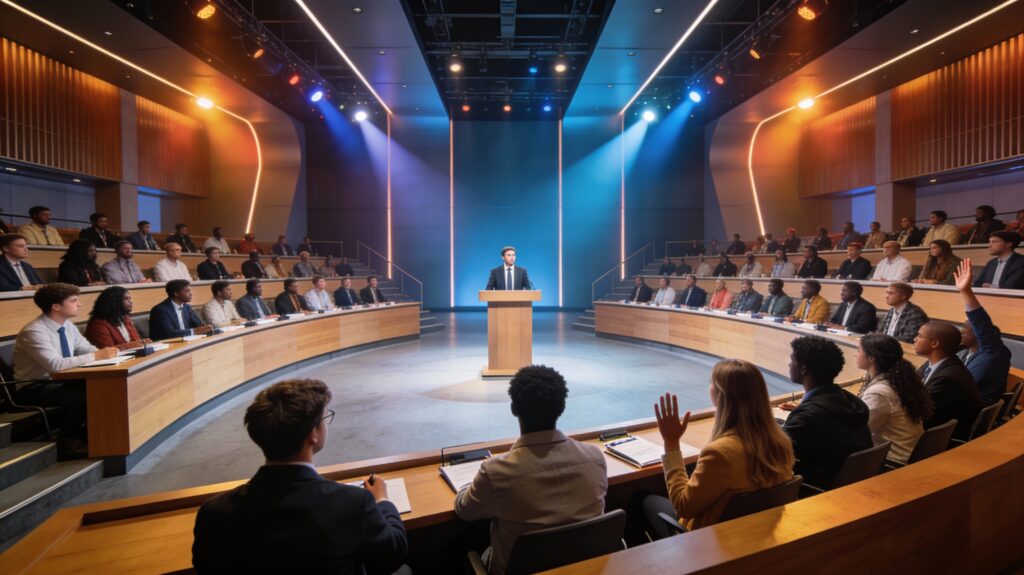
The Global Youth Parliament Debate is Rolfe’s SDG Academy’s flagship inaugural event—a Westminster-style parliamentary debate where youth from 25+ countries engage substantive policy arguments on one of the most pressing climate questions of our time.
This isn’t a panel discussion. This is serious policy thinking. This is democracy in action. This is youth leading, not following, the conversation on climate solutions.
Truly Global
Participants from Africa, Asia, Europe, Americas, and Oceania. English-spoken with subtitles provided afterwards.
Westminster Format
The same parliamentary debate format used in UK Parliament, universities worldwide, and international championships.
Climate Justice Lens
All arguments centered on equity, systems thinking, and Global South perspectives on adaptation and mitigation.
Recorded & Published
Debate recorded and published on YouTube. Participants featured as emerging climate leaders on RSA platform.
Should we prioritize adaptation over mitigation?
This isn’t just another panel discussion. This is serious policy thinking. This is democracy in action. This is youth leading, not following, the conversation on climate solutions.
For too long, youth have been invited to speak at climate forums, but rarely empowered to lead substantive debates on strategy, policy, and resource allocation. This debate changes that. We’re not asking permission. We’re setting the agenda.
The Motion: Westminster Proposition
This House believes that global climate policy must prioritize adaptation strategies over mitigation and reversal efforts.
Why This Question Matters
Mitigation & Reversal
Reducing greenhouse gas emissions and removing carbon from the atmosphere to prevent further warming.
Examples:
- Renewable energy transition
- Carbon capture technology
- Reforestation programs
- Energy efficiency mandates
Adaptation & Resilience
Preparing communities to live with climate impacts that are already unavoidable, building resilience and protecting livelihoods.
Examples:
- Drought-resistant crops
- Coastal defense infrastructure
- Climate-resilient housing
- Water security systems
The Central Challenge
Resources are finite. Political will is limited. Every dollar spent on one approach is a dollar not spent on the other.
This debate asks: What should global climate policy prioritize, and why?
Why We’re Debating This
- Frontline reality: Communities already face floods, droughts, heatwaves. They need adaptation now, not promises of mitigation in 2050.
- Emissions trajectory: Global emissions continue to rise despite decades of mitigation-focused policy. Is it time to shift resources?
- Equity question: The Global South contributes least to emissions but suffers most. Should adaptation take precedence in global policy?
- Pragmatism vs. ambition: Is focusing on adaptation necessary realism, or does it risk giving up on preventing catastrophic warming?
This is not an easy question. That’s why we’re debating it.
How the Debate Works
Westminster Parliamentary format
The debate follows the Westminster system used in the UK Parliament, universities worldwide, and international debating championships.
Government Side
Position: For the Motion
Argues that global climate policy should prioritize adaptation strategies over mitigation.
Opposition Side
Position: Against the Motion
Argues that global climate policy should continue to prioritize mitigation and reversal efforts.
Debate Roles
Lead Speaker
8 minutes per side
Deliver structured, evidence-based opening arguments. Set the framework for your side’s case.
Who: Selected based on debate experience and clarity of thought.
Backbencher
3 minutes per speaker
Add evidence, personal stories, and regional perspectives. Support lead speakers with detailed arguments.
Who: Open to all applicants. Passion and clear communication matter more than experience.
Moderator
Full debate
Maintain order, call on speakers, summarize key arguments. Neutral facilitator ensuring fair exchange.
Who: Selected for neutrality, communication skills, and understanding of parliamentary procedure.
Analyst/Rapporteur
Ongoing
Write summaries and analysis of debates. Document key arguments and their implications.
Who: Strong analytical and writing skills required.
Audience Member
Real-time participation
Engage in live chat, ask questions during Q&A, vote on which side’s arguments were strongest.
Who: Everyone is welcome. No experience needed..
Volunteer Organizer
variable
Coordinate local viewing events, recruit participants, facilitate discussions in your region.
Who: Leadership experience helpful but not required.
Frequently Asked Questions
Do I need debate experience to participate?
For Lead Speaker: Yes, debate experience is important. You’ll be setting your side’s framework with structured, evidence-based arguments.
For Backbencher: No. Passion and clear communication matter more than experience. We’ll provide guidance on Westminster format.
For Audience: No experience needed. Simply engage with ideas.
What if I’m not sure which side I agree with?
That’s perfectly fine! In the Westminster debate, participants are assigned a side, regardless of their personal beliefs. Good debaters can construct compelling arguments for both perspectives. This is an intellectual exercise, not a personal ideology test
Will the debate be recorded?
Yes. The debate will be recorded and published on YouTube for global access. Participants will be featured as emerging climate leaders on the RSA platform.
Can I participate from any country?
Yes! This is a fully global event. We especially encourage participants from Africa, Asia, and other underrepresented regions to ensure diverse perspectives in the debate.
What language will the debate be in?
The debate will be conducted in English.
Is there a participation fee?
No. This event is completely free. We believe climate leadership should not be gated by cost.
Can I invite friends to watch?
Absolutely! Share the registration link widely. We want the largest possible audience to witness youth leading substantive climate policy debate.
What happens after the debate?
Participants are invited to join RSA’s alumni network, future programs, and ongoing initiatives. We’re building a global community of youth climate leaders, and this debate is the beginning.
Questions?
Get in touch with the Global Youth Parliament team for any questions about the debate, your role, or participation details.
Website
Ready to Lead?
This is your chance to shape the climate conversation.
Youth are not just affected by climate policy – we’re shaping it. This debate is the beginning.
Will you join us?
Contact & Questions
For questions about the debate, contact:
Email: debate@rolfessdgacademy.org
Youth Leading the Conversation on Climate Solutions
Solar Cohort – March 2026
8-Week Intensive Program
Our flagship program brings together 30-50 participants from around the world for an intensive 8-week learning journey focused on Climate Action (SDG 13), Quality Education (SDG 4), and Life on Land (SDG 15).
What You’ll Learn
- Systems thinking and interconnected global challenges
- Climate science and sustainable solutions
- Educational approaches for sustainability
- Biodiversity conservation and ecosystem restoration
- Project design and implementation skills
- Leadership and community organizing
Program Structure
6-8 modules per week including live sessions, group projects, expert lectures, and peer learning circles. All sessions are online and recordings are available for asynchronous participation.
Outcomes
- Certificate of completion
- Portfolio of SDG projects
- Global network of changemakers
- Mentorship opportunities
How to Participate
Applications open twice a year. The program is free, with scholarships available for participants from low-income backgrounds.
Lecture Series
Monthly Events | Free & Open to All
Join experts, practitioners, and thought leaders from around the world for monthly conversations on the most pressing sustainable development topics.
What to Expect
- 60-90 minute interactive sessions
- Expert presentations followed by Q&A
- Topics covering all 17 SDGs
- Networking opportunities with global participants
Format
All lectures are hosted on Zoom and livestreamed to YouTube. Sessions are recorded and made available on our platform within 48 hours.
How to Participate
Simply register for upcoming lectures through our website. All sessions are completely free and open to anyone interested in sustainable development is free, with scholarships available for participants from low-income backgrounds.
SDG Ideas Hub
Year-Round Platform | Open Submissions
Have an idea for advancing the SDGs? Share it with the world through our Ideas Hub. We publish innovative proposals, research findings, and project concepts from students, professionals, and community leaders.
What We Publish
- Research papers and case studies
- Project proposals and frameworks
- Policy recommendations
- Creative solutions and innovations
- Community success stories
Benefits
- Global visibility for your work
- Portfolio building opportunities
- Feedback from experts and peers
- Networking with like-minded innovators
- Potential funding connections
How to Submit
Submit your ideas year-round through our online form. Our editorial team reviews submissions monthly and provides feedback within 2-3 weeks..